
Types of Self-Defense Techniques: A Practical Guide

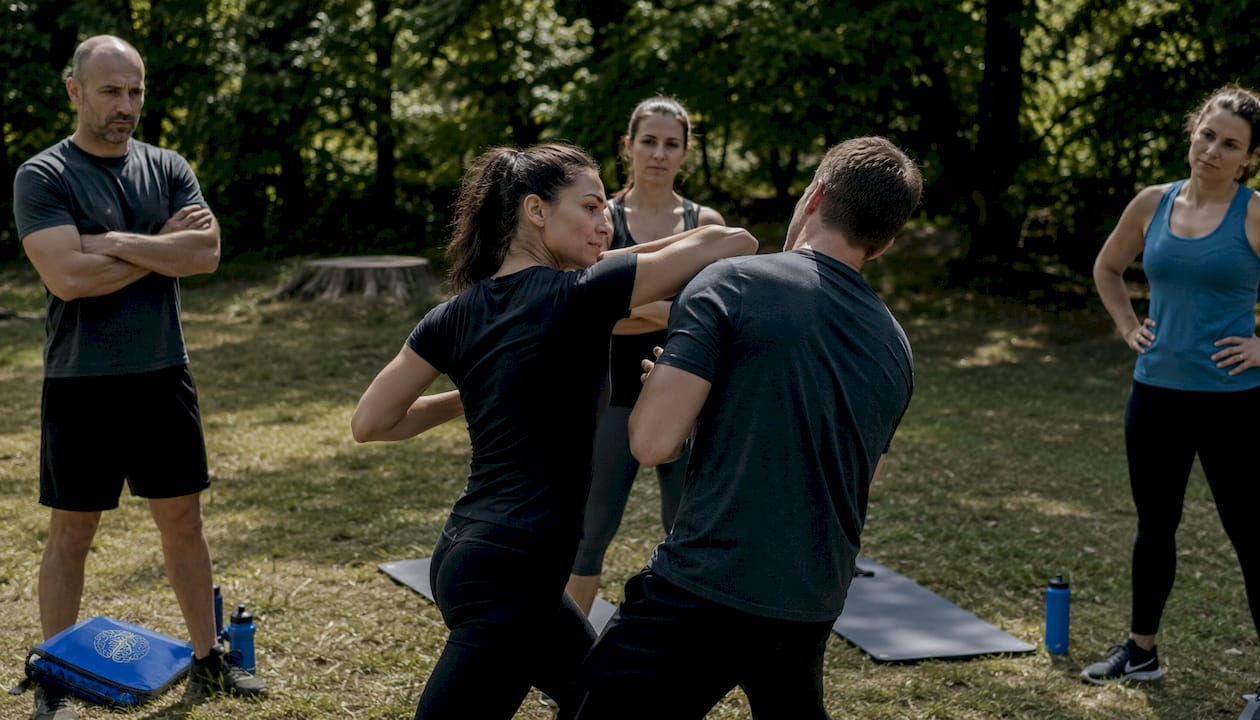
Effective self-defense draws from three distinct categories: awareness and de-escalation, physical techniques, and purpose-built tools. No single method covers every situation, which is why the most reliable personal safety plans layer all three. Whether you are just starting out or looking to sharpen what you already know, understanding how these categories work together gives you a clear path forward.
The main types of self-defense techniques include:
Situational awareness and de-escalation — recognizing danger early and using communication to prevent confrontation
Physical techniques — martial arts systems like Krav Maga, Brazilian Jiu-Jitsu, Muay Thai, Boxing, Wrestling, Taekwondo, and Judo, plus basic moves anyone can learn
Verbal self-defense — using assertive, calm communication to set boundaries and deter aggression
Self-defense tools — firearms, pepper spray, stun guns, and improvised everyday objects
Psychological preparedness — building the confidence and mental readiness to respond under stress
The goal of physical self-defense is not to win a fight. It is to disrupt an attacker just long enough to escape and reach safety. Keeping that principle at the center of your training changes everything about how you prepare.
1. Situational awareness: your first line of defense
Awareness is the self-defense skill most people already have access to but rarely practice deliberately. Recognizing a threat before it escalates gives you time, options, and distance. Once a confrontation is physical, your choices narrow fast.
Practical awareness habits include noticing exits, watching for unusual behavior, and trusting your gut when something feels off. Simple adjustments make a real difference:
Keep your phone in your pocket when walking in unfamiliar areas
Sit with your back to a wall in public spaces so you can see the room
Identify at least two exits whenever you enter a building
Avoid wearing both earbuds in environments where you need to stay alert
Walk with purpose and make brief eye contact to signal confidence
De-escalation works alongside awareness. When a tense situation develops, calm body language and a steady voice can prevent it from going further. Sergeant Ryan Skiffington, a public safety officer with the University of Washington Medical Center, recommends disengagement tactics over physical confrontation whenever possible. Maintaining distance, speaking calmly, and planning your exit are the core of that approach.
Pro Tip: A calm, quiet voice carries more authority than a raised one. When de-escalating, lower your pitch slightly, slow your speech, and keep your hands visible and open at your sides. This combination signals non-aggression while projecting control.
2. Firearms and non-lethal tools for personal protection
Armed self-defense is legal in most U.S. states, but carrying a weapon without proper training creates more risk than it removes. The tool is only as reliable as the person using it under stress.
Firearms are the most widely carried self-defense tool in the United States. Responsible ownership requires consistent range practice, safe storage, and a clear understanding of your state’s laws on carry permits and use of force. Training should include drawing under pressure, not just target shooting from a static position.
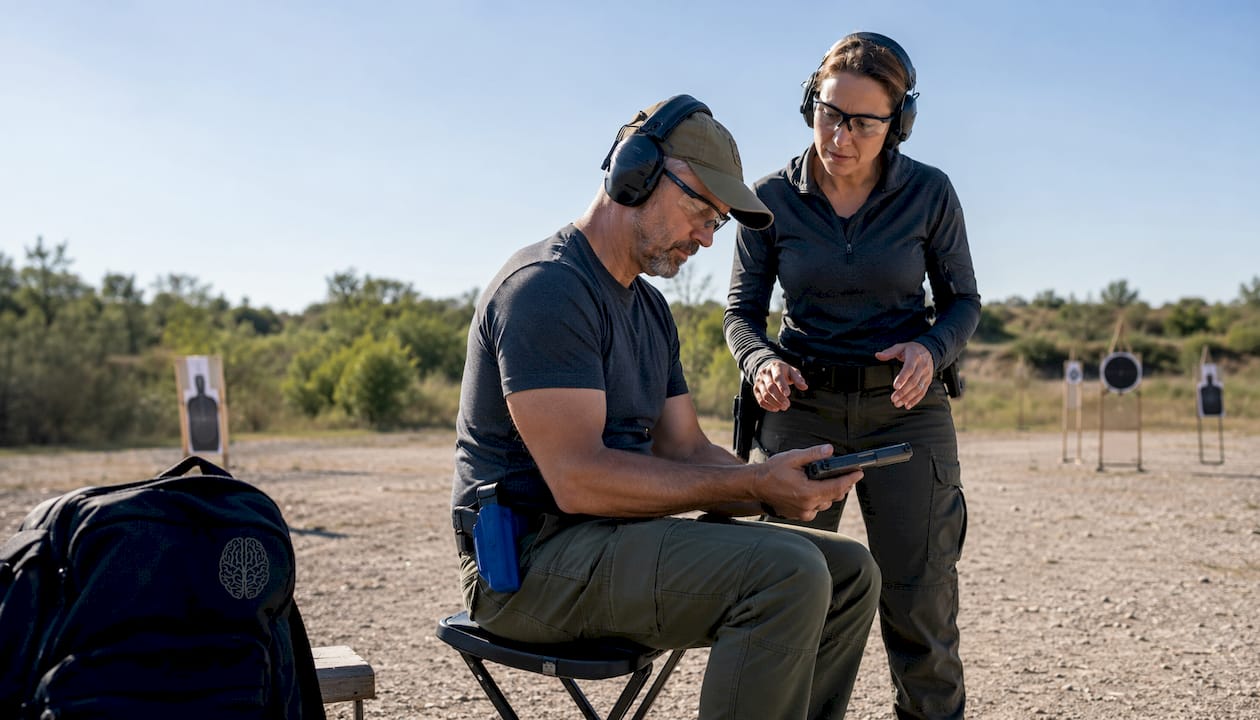
Pepper spray is one of the most practical non-lethal options available. It is legal in all 50 states, though some states restrict canister size or concentration. Effective use depends on knowing your spray’s range, aiming for the eyes and face, and moving away immediately after deploying it.
Other non-lethal and improvised options worth knowing:
Stun guns and tasers — effective at close range; check your state’s laws before carrying
Personal alarms — loud, simple, and useful for drawing attention in a crowd
Everyday objects — keys held between fingers, a heavy bag, or an umbrella can create distance or a moment of disruption
Tactical flashlights — bright enough to temporarily blind an attacker and solid enough to use as a striking tool
Safety with any tool comes down to one principle: train with a weapon before you carry it. Fumbling with an unfamiliar device under stress is a liability, not an advantage.
3. Martial arts and physical techniques for real-world defense
Physical self-defense covers a wide range of methods, from formal martial arts systems to basic moves that require no prior training. The right starting point depends on your goals, fitness level, and how much time you can commit.
Major martial arts systems used in self-defense
Martial Art | Primary Focus | Best For |
Krav Maga | Real-world threat neutralization and escape | Adults wanting practical, scenario-based training |
Brazilian Jiu-Jitsu | Ground control and submission holds | Situations where a fight goes to the ground |
Muay Thai | Striking with fists, elbows, knees, and shins | Stand-up striking and clinch work |
Boxing | Punching technique, footwork, and head movement | Developing striking fundamentals |
Wrestling | Takedowns, clinch control, and ground positioning | Controlling distance and preventing takedowns |
Taekwondo | High kicks and fast footwork | Building speed, flexibility, and kicking power |
Judo | Throws, trips, and takedowns | Using an attacker’s momentum against them |
Krav Maga stands out among these systems because it was designed specifically for imperfect, unpredictable conditions rather than a controlled sporting environment. Boxing and wrestling develop excellent foundational skills, but they operate within rules that real-world violence ignores. Krav Maga trains for the chaos of an actual attack, including multiple attackers, weapons, and confined spaces.
Basic physical moves anyone can learn
You do not need years of training to protect yourself. Simple strikes targeting the eyes, throat, and groin create escape opportunities without requiring strength or size advantages:
Palm-heel strike — drive the heel of your palm forward into the attacker’s nose or chin
Elbow strike — at close range, the elbow is one of the hardest surfaces on the body; aim for the jaw or temple
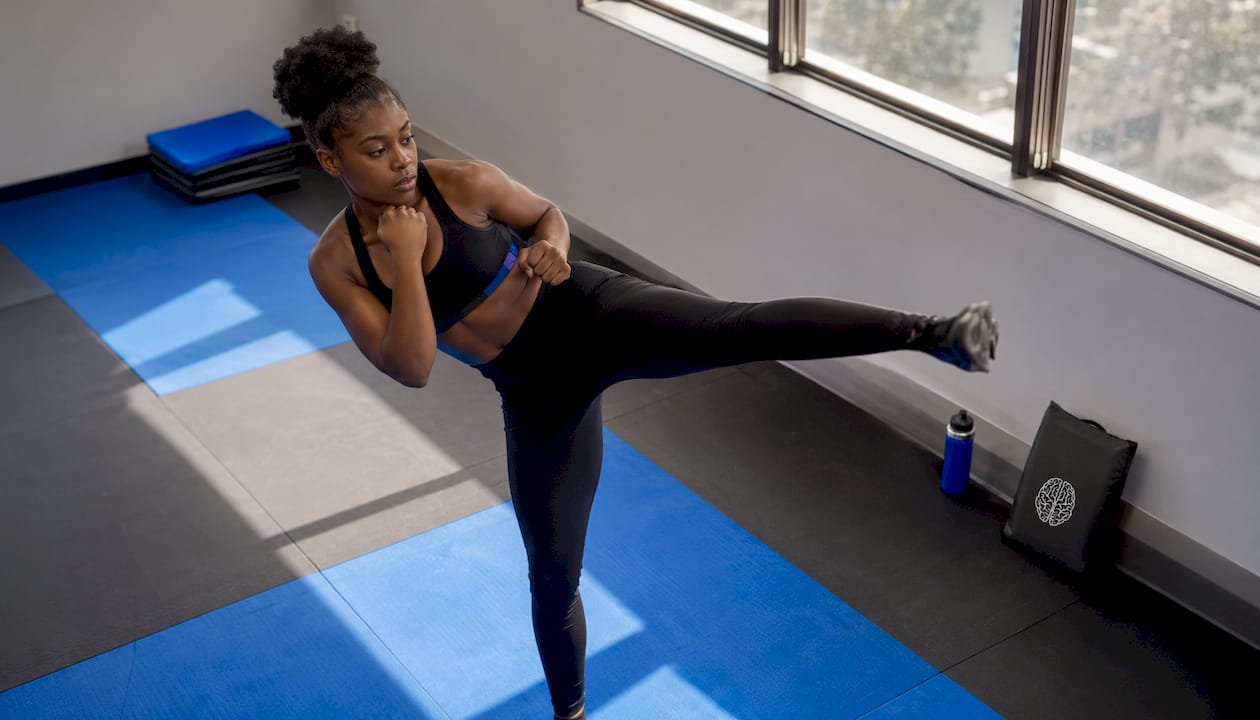
Front kick to the knee or groin — a straight push kick disrupts balance and creates distance
Eye gouge — in a life-threatening situation, targeting the eyes forces an attacker to protect their face
Wrist grab escape — rotate toward the attacker’s thumb, the weakest point of any grip, to break free
Technique matters more than strength. A well-placed elbow strike from a smaller person is more effective than a wild swing from someone twice their size.
Pro Tip: When practicing self-defense moves for beginners, focus on three or four moves and repeat them until they become automatic. Muscle memory built in calm practice is what shows up under stress.
4. Verbal self-defense techniques to prevent escalation
Verbal self-defense is the practice of using words, tone, and body language to set clear limits and reduce the likelihood of physical confrontation. It is not about being passive. Done well, it projects enough confidence and resolve that many aggressors simply move on.
Verbal skills are an effective first step before any physical response becomes necessary. The core techniques include:
Assertive, direct language — state your limit clearly and without apology: “Back up. I don’t want trouble.” Short sentences work better than explanations.
Firm, even tone — a steady voice signals control. Shouting or pleading often escalates rather than calms.
Strong body language — stand upright, keep your feet shoulder-width apart, and maintain eye contact. Body language combined with verbal assertiveness signals that you are not an easy target.
Naming the behavior — saying “You are standing too close” out loud can interrupt an aggressor’s focus and draw attention from bystanders.
Loud verbal commands — a sharp, loud “Stop!” or “Back off!” in a public space draws witnesses and can startle an attacker into hesitation.
Women in particular benefit from verbal self-defense training because many threats begin with social pressure rather than sudden violence. A practical guide to women’s self-defense covers how to recognize these escalation patterns early and respond before the situation becomes physical.
5. Legal considerations and safety tips you need to know
Self-defense law in the United States centers on one principle: the force you use must be reasonable and proportional to the threat you face. Using lethal force against a non-lethal threat, or continuing to strike after the threat has stopped, can result in criminal charges even when the initial response was justified.
Key legal points every person should understand:
Reasonable force — your response must match the level of threat. A verbal threat alone rarely justifies physical force.
Duty to retreat — some states require you to attempt to leave before using force. Others have “stand your ground” laws that remove this requirement. Know which applies where you live.
Weapon laws — carry permits, legal canister sizes for pepper spray, and restrictions on stun guns vary by state. Research your local laws before carrying any device.
Castle doctrine — most states allow greater force when defending yourself inside your home than in a public space.
Beyond the legal side, practical safety habits reduce the chance you will ever need to use any of these techniques:
Avoid poorly lit areas, especially alone at night
Tell someone where you are going and when to expect you back
Trust discomfort. If a situation feels wrong, leave before you can confirm why.
Call for help early. Bystanders and emergency services are resources, not last resorts.
Practice escape routes. Knowing how to get out of a building or vehicle quickly is a skill worth having.
6. CVPSD’s evidence-based approach to self-defense
CVPSD, the Center for Violence Prevention and Self-Defense, is a 501©(3) non-profit that grounds its training in research rather than tradition. The organization works with schools, community groups, government agencies, and at-risk populations across the United States, delivering programs that meet state and local laws.
The core principle behind CVPSD’s approach is that physical defense succeeds when it creates an escape opportunity, not when it defeats an attacker. Success is measured by reaching a safe, public location. That framing shapes every technique CVPSD teaches.
CVPSD’s best practices reflect a layered defense strategy:
Awareness first — most confrontations can be avoided entirely by recognizing warning signs early
Verbal and behavioral tools second — de-escalation, assertive communication, and confident body language address the majority of threats that awareness alone does not resolve
Physical techniques as a last resort — when physical defense is unavoidable, the goal is disruption and escape, not prolonged combat
Targeted escape techniques — rotating toward an attacker’s thumb to break a wrist grab is one example of the precision CVPSD emphasizes over brute force
Ongoing training — skills degrade without practice; CVPSD recommends regular reinforcement through reality-based training that simulates real-world conditions
Physical self-defense is not about overpowering an attacker. It is about creating one moment of disruption and using it to get away.
CVPSD also recognizes that self-defense needs differ across populations. Programs for at-risk groups address the specific threat environments those communities face, from domestic violence situations to workplace aggression, with techniques and communication strategies adapted accordingly.
Ready to build real personal safety skills? CVPSD offers both online and in-person training programs designed for adults at every experience level. Visit cvpsd.org to find a program near you.
Key Takeaways
Layering awareness, verbal skills, and physical techniques gives you the most reliable personal safety foundation across the widest range of real-world situations.
Point | Details |
Awareness prevents most threats | Noticing exits, odd behavior, and trusting instincts reduces vulnerability before any physical skill is needed. |
Physical defense means escape, not combat | The goal of any physical technique is to disrupt an attacker long enough to reach safety, not to win a fight. |
Target the thumb to break grabs | Rotating toward the attacker’s thumb, the weakest grip point, is the most effective escape from wrist and clothing grabs. |
Verbal assertiveness deters aggression | Calm, direct language combined with confident body language signals you are not an easy target. |
Know your local laws | Reasonable force, duty-to-retreat rules, and weapon regulations vary by state and must be understood before carrying any tool. |
Recommended


